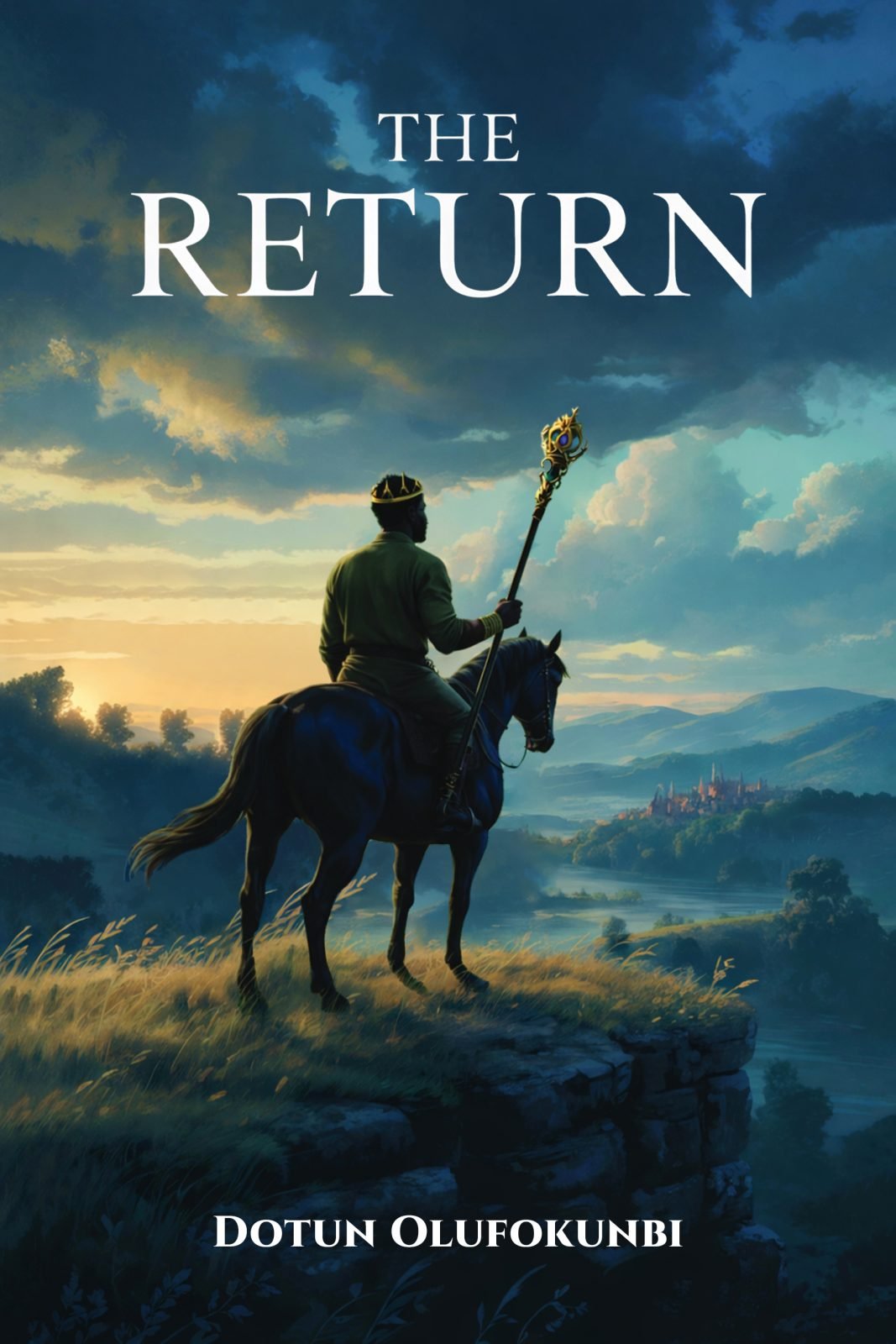
Dotun Olufokunbi Named British Publishers Author of the Month for October 2026
British Publishers Author Circle is pleased to recognise Dotun Olufokunbi as its Author of the Month for October 2026. The recognition honours his play The Return, a historical drama set in the Oyo Empire of the early eighteenth century, and the curiosity and sense of purpose that led him to write it.
The timing matters. The Return was published on 21 January 2026, which means this feature arrives within the first year of the book's life, while it is still finding its readers. Recognising the play now gives those readers a reason to look closely at what it sets out to do, and gives its author a moment of well-earned attention.
At the centre of the play is a question that has outlasted many thrones: who has the right to wear the crown? In Dotun's telling, the question is raised by Aremo Adegbite, the son of a dead king, who comes back from exile to claim what he believes is his. Dotun tells it through proverb, praise song, verse and the physical life of the stage, and he is open about his purpose, which is to keep Yoruba culture and tradition in view and open to discussion.
This feature looks at the author, at the tradition that started the play, at the world of Igotun he builds, and at his reasons for believing that the play belongs in the present.
Meet Dotun Olufokunbi: From Ilesha and Ile-Ife to Edinburgh
Dotun Olufokunbi is a native of Ilesha, in Osun State, south-western Nigeria. He began his primary education there, attended the staff school of Obafemi Awolowo University, and went on to secondary school in Ile-Ife. He completed his university education at Obafemi Awolowo University with a Bachelor of Arts in English Language, and he is presently studying for a Master's degree at Edinburgh Napier University in Scotland.
He grew up in the university's staff quarters, an academic environment, and he says it exposed him to works of literature at an early age. His love of reading became evident over time and, as he puts it, eventually gave birth to a love of writing. It is a small but telling detail that Ilesha, his hometown, is also the town to which his play sends its exiled prince.
What the text itself shows is a writer attentive to language. The play moves easily between plain conversation, formal greetings, proverbs and verse, and titles such as Kabiyesi, Oloye and Olori do their work inside the dialogue. It carries a dedication, "For Morayo, With Love!", and a short note headed About Play in which Dotun describes the idea as born of curiosity and an inquisitive mind.
From Oyo Tradition to the Stage: How The Return Began
Dotun traces the play to his reading about the culture of the Yorubas, and in particular as it was practised in the old Oyo Empire. His note names one book, Nigeria and her Neighbours, and a passage on Oyo around the year 1700. He observes that Ile-Ife is generally revered as the origin of all the Yorubas, and adds that Oyo is also paramount in Yoruba history. What caught his attention was the practice of getting rid of the Aremo alongside the king. It fascinated and astonished him, and it gave him the idea for the play.
Among the Yorubas, as Dotun explains for the curious, the first son of a king is called the Aremo. In the world of the play, when a king dies, his Aremo is expected to die with him. The narrator calls this horrendous and then adds a dry question: who dares question tradition? Aremo Adegbite is spared because he is young, and he is sent into exile against the will of the chiefs. When he has grown, he returns to the kingdom he was exiled from, to lay claim to the throne.
Dotun's stated aim is wider than the plot. He says the play tries to speak about the cultural and traditional practices of the Yorubas, especially in relation to kingly succession, and that it seeks to explain how the Yorubas maintain peace during the reign of one king and keep overly ambitious princes in check. In his note he also mentions a second custom, that an incoming king takes as his wives the women already in the palace, and says he has transferred it into the play.
He is careful about what the play is. He calls it a work of imaginative narration, in which he tries to bring his characters to life and make them as real as he can. The setting is historical, the method is imaginative, and he says so. The action takes place in Igotun, which the narrator calls an affiliate village of old Oyo, in 1723.
Inside The Return: A Play in Three Acts
The Return is structured in three acts and eleven scenes, five in the first, four in the second and two in the third. It begins in darkness, with a soft dirge sounding offstage before a spotlight finds two men playing Ayo, the wooden board game, under a tree with a gourd of palm wine beside them. A narrator steps forward. He jokes that he has no cap to doff and says he cannot call himself a drummer until the audience begins to dance. Then he hands the stage to the two friends.
Those friends are Aremo Adegbite and Makin. Aremo has grown up in exile in the household of a warrior, and he tells Makin that he means to claim his throne, whether easily or by duress. Makin, a brave fighter, pledges himself to the cause and sets aside his own marriage plans to join it.
The second scene moves to the palace of Oba Akesua, where six chiefs sit on mats and a challenge has arrived. The chief Otun urges a peaceful settlement. The Bashorun answers that a boy must be taught a lesson, and the two sides meet at the Hill of Abule Ipara. The stage directions ask for offstage drumbeats and fluctuating light, so that the fighting is only partly seen, a reminder that Dotun is writing for performance as well as for the page.
The second act widens the circle. Olori Abeke, the queen, makes her way to Aremo's forest camp to plead with him, and Aremo meets Adeleke, the king's son, face to face. The villagers of Igotun bring their grievances to the throne, and Oba Akesua decides that he will talk with Aremo, whether the outcome is peace or war.
The third act brings everyone together at the palace, in a scene staged as a ceremony with dancing and Bata drums. This is where the surprise promised in Dotun's note arrives. We leave it for readers to discover, as the author intended.
Proverb, Praise Song and Performance: The Language of the Play
Proverbs are the play's everyday currency. Characters use them to counsel, to threaten and to console. Otun, urging caution in the council, reminds his fellow chiefs that "The one who asks for direction never gets lost." Makin, watching his friend change, warns that a duckling that refuses its mother's guidance will drown. The sayings are short and vivid, drawn from the natural and domestic world, and they give each speaker a distinct way of arguing.
Verse gives the play a second register. After the first battle, the hatchet man Oyebade sings a praise song to Aremo, and the warriors answer with a salutation in Yoruba. Later, Aremo and Adeleke meet in a contest of chants, each answering the other with a small fable. In a quieter passage, Aremo speaks in verse to his mother, recalling how as an infant he sought the warmth of her chest when he was afraid. A reader moves from boast to menace to tenderness within a few pages.
The stage directions are specific and generous. They name the Agbada worn by chiefs, the Aso-Ofi wrapped by the queen, and the Buba and Soro Aremo wears for the ceremony, and they place a horse-tail whisk in the king's hand. The narrator plays to the audience, and Oyebade steps out of the action to comment on it.
Respect for Tradition and the Cost of Ambition
Dotun names the play's main ideas plainly. It highlights the need to respect norms and culture, since ignoring them may carry painful consequences, and it highlights the negative impact of ambition. He sums up the thought with a saying he attributes to the elders: "You do not test the depth of a river with two legs." He pairs it with the familiar advice to look before we leap.
The play shows those ideas at work rather than stating them. After his first victory, Aremo Adegbite is quick to enjoy a title he has not yet been given. He requires his warriors to prostrate themselves and reminds them that even the king's mother bows to a king. Makin is the one man who does not bow, and he says quietly to himself that power already intoxicates his friend.
Around Aremo, other characters offer counsel and are not always heard. Otun argues for dialogue in the council, both before the battle and after it. Olori Abeke goes to the camp to appeal to her son, and her maidservant Ajoke works behind the scenes to bring the right people together. One of the play's insights is that good advice can fail not only because it is ignored but because it comes too late or too indirectly.
The play is also fair to the people who must live with the consequences. In the second act, a spokesman for the villagers tells Oba Akesua that farms have been looted and huts burnt, and that the council has not acted. Otun answers for the chiefs, and the king replies that he has not folded his arms.
Dotun is equally careful with the custom that sets the story in motion. Early on, Makin dismisses it as a stupid tradition. Later, the queen explains the reasoning behind it: a king rules alongside his son so that the Aremo does not grow too ambitious and turn on his father. Makin asks why an Aremo would do that when he knows he will eventually inherit, and she replies that history records such cases. The exchange gives the custom a voice and a rationale, which is the explanation Dotun says he wanted the play to offer.
Why Now: Culture, Storytelling and a Place on the Global Stage
Dotun is direct about why he thinks the play belongs in the present. Technology, he says, is good and commendable, yet it is pushing some activities into the background, and many people no longer consider African culture and tradition relevant in a world of social media and the rat race. He cites Wole Soyinka and Ola Rotimi, and works such as The Gods Are Not to Blame and The Lion and the Jewel, as examples of epic writing that celebrated African culture. He believes that returning to such work can again put that culture on the global stage for discussion, and he feels the time to publish such a play is now, because in his view Yoruba culture and tradition are fast disappearing from the global space.
Storytelling matters to him too. In the past, he notes, it was part of how children were raised and a source of information and refreshment for the elderly, and he counts its revival among his intentions. He also places the play within present debates. Discipline of a child was communal not long ago, he observes, and there is now much discussion about the best way to raise a child for a better world. He sees the book as one contribution, offering readers options to consider. He sees a lesson for public life as well, in how people aspire to office with large promises without weighing their ability to deliver, and he suggests the play invites them to pause and reset.
His hopes are modest in tone and wide in reach. He hopes the book will revive research into the past for the benefit of the wider society, and that more people will return to contemporary writing so that culture and tradition do not become scarce. He is looking to work on another piece of literature as time goes on.
A Play for Readers, Students and Theatre Makers
At 58 pages in paperback, The Return can be read in a single sitting, which suits a reading group, a drama class or a company looking for a script to read aloud together. The cast list ranges from the principal roles to a Council of Chiefs, warriors, women and villagers, so a larger group has a place for everyone.
Dotun says the subject will give students, teachers and anyone who wants substantial content a good read, and he recommends the play to every reader. No special knowledge of Yoruba history is needed. The author supplies the background he thinks a curious reader requires, and the play does the rest. Questions that readers and groups might bring to it include:
Why does the play let the custom of the Aremo be explained as well as challenged?
What does the saying about testing the depth of a river with two legs mean for Aremo's choices?
Where does Makin's loyalty to Aremo end, and how does he decide where to draw that line?
Who in the play asks for direction, and who does not?
Why Dotun Olufokunbi Is Our October 2026 Author of the Month
This month's recognition rests on what is on the page and on what the author has told us about it. Four things stand out.
First, there is the clarity of purpose. Dotun explains where the play came from, what he took from tradition, what he imagined and what he hopes it will do, and he does so plainly.
Second, there is the craft. The play holds together a historical setting, a cast of distinct voices, verse and proverb, and a plot that keeps its main surprise until the end. It trusts its audience to follow.
Third, there is the subject. Questions of who inherits, who decides and who pays when power is contested are not tied to one century.
Finally, there is the moment. A first year in print is a time when an author's work benefits from being noticed, and this feature is the Author Circle's way of noticing it.
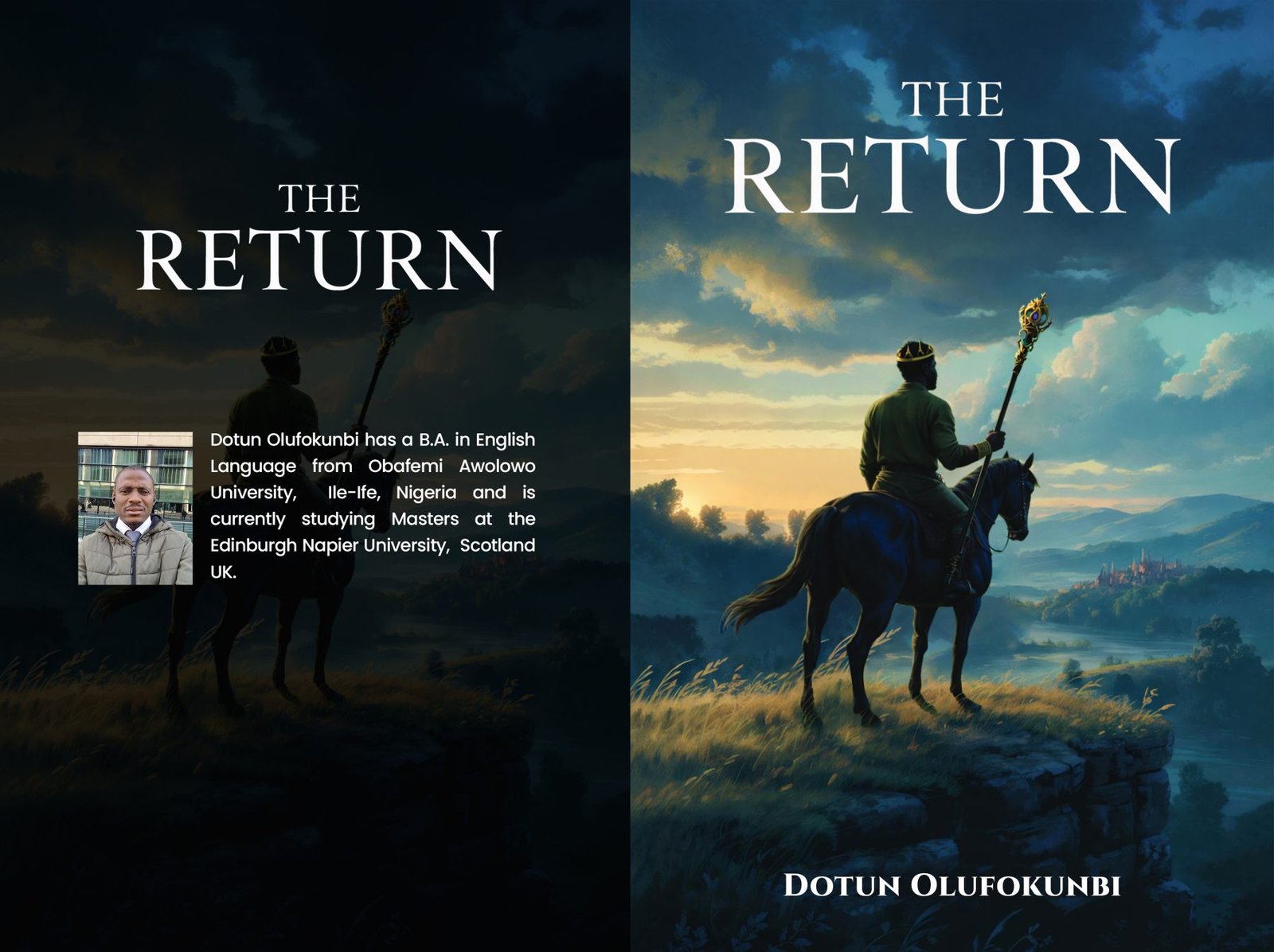
Congratulations, Dotun Olufokunbi, from British Publishers
On behalf of everyone at British Publishers, congratulations to Dotun Olufokunbi on being named Author of the Month for October 2026. The Return turns a single tradition, met in his reading, into a drama of friendship, ambition and counsel, written with a clear sense of its audience and its stage. That is an achievement worth marking.
We thank Dotun for sharing his work and his reasons for it, and we wish him well with the new writing he hopes to undertake. Readers who would like to explore the play can find it through the Amazon UK listing in the links below.
Dotun Olufokunbi
[Official website and social profile links to be added once supplied]
Books by Dotun Olufokunbi
The Return | Amazon (UK): Click here